
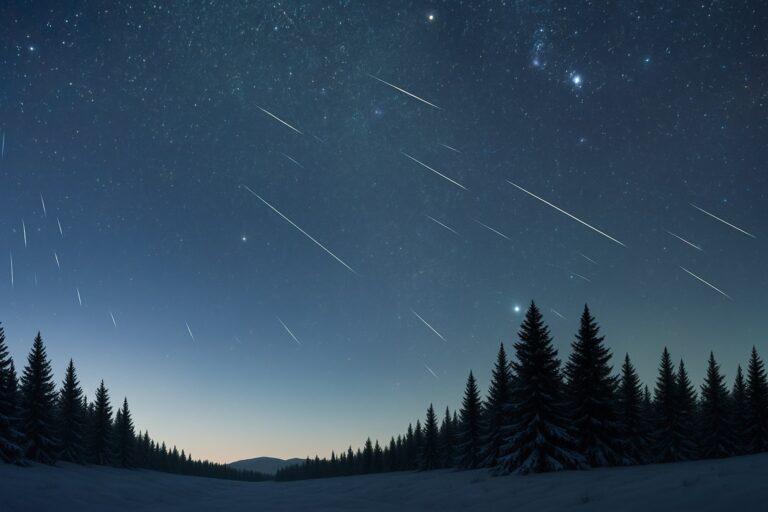
The year is winding to a close. Flakes of early snow glitter beneath the stars and the air carries that unmistakable sense of holiday magic. It’s a time when twinkling lights appear on every corner, families gather close, and the rhythm of the Earth itself seems to slow and breathe. Yet above all the festivities, a breathtaking celestial event is preparing to unfold. It that reminds us how deeply connected we are to the seasonal turning of our planet and the eternal dance of light and shadow.
On Sunday, December 21, 2025, at 15:02 UTC, the December Solstice will mark the official beginning of winter in the Northern Hemisphere and summer in the Southern Hemisphere. It’s the moment when the South Pole of the Earth tilts toward the Sun, placing the Sun directly above the Tropic of Capricorn at 23.44° south latitude. For those of us north of the equator, it brings the longest night and the shortest day of the year — a night rich in myth, meaning, and cosmic beauty.
But this year’s solstice is unlike most. A new moon on December 20 means the sky will be exceptionally dark and nearly moonless. This sets the stage for one of the most spectacular stargazing events of the season: the Ursids Meteor Shower. These graceful streaks of light, radiating from the constellation Ursa Minor, will sparkle through the holiday skies like celestial confetti, like a gift from the universe to those who take the time to look up.
Throughout history, the solstice has always been a celebration of balance reminding generations that that light always returns. Across continents and centuries, people have kindled fires, lit candles, and gathered beneath the stars to honor the moment when the world turns once again toward the sun. In 2025, under one of the darkest skies in recent memory, that timeless ritual will take on new brilliance.
In a season already filled with the glow of Christmas lights, Hanukkah candles, Yule fires, and the kinara flames of Kwanzaa, the solstice adds a deeper cosmic layer to our shared celebration of light. The darkness is not something to fear, but something to honor. The peacefulness of the dark night creates a sacred space that allows light, hope, and reflection to shine even brighter.
The solstice has always symbolized the delicate balance of the cosmos. It’s a reminder that even the longest night eventually yields to the dawn. And this year, with the new moon dimming the sky and the Ursids painting it with falling stars, the December Solstice 2025 promises to be one of the most enchanting nights of the decade.
The Cosmic Mechanics Behind the Solstice
To understand the magic of the solstice, we need only look to the geometry of our planet. Earth’s axis is tilted at about 23.44 degrees, and that tilt is the reason we have seasons at all. As Earth orbits the Sun, sometimes the Northern Hemisphere leans toward it, bathing the northern half of the globe in the long days of summer. Six months later, it tilts away, giving rise to the short, cold days of winter.
On December 21, 2025, the Northern Hemisphere reaches its maximum tilt away from the Sun. The Sun climbs to its lowest midday point in the sky, and shadows stretch long and thin across snow-covered ground. The sunlight is pale, and the day brief . But after this moment, everything begins to change and the says will begin to grow longer.
Each sunrise that follows will come a little earlier; each sunset will linger a little longer. The solstice marks the turning point of light. It Symbolized the rebirth of the Sun in the eyes of countless ancient civilizations, and the quiet promise of brighter days ahead.
The Gift of Darkness: A New Moon Before the Solstice
In most years, the winter solstice already brings a deep, early night , but in 2025 that night will be even darker and more striking. On December 20, the Moon will reach its new phase, meaning it will rise and set with the Sun, its illuminated face turned completely away from Earth.
Without the Moon’s silvery glow, the sky will be as dark as it gets. Away from city lights, the Milky Way will sprawl overhead in a dazzling river of starlight. Constellations like Orion, Taurus, Gemini, and Ursa Minor will shine in sharp relief against the black velvet of space. It’s a perfect setup for astronomers, stargazers, and anyone who loves the quiet magic of the night sky.
This darkness will also create ideal conditions for the Ursids Meteor Shower, a gentle celestial display that coincides beautifully with the solstice.
The Ursids Meteor Shower: Winter’s Subtle Fireworks
While the Geminids steal the show earlier in December, the Ursids Meteor Shower has a charm all its own. Each year between December 17 and 25, Earth drifts through a trail of dust left behind by Comet 8P/Tuttle, a celestial traveler discovered in 1790. As these ancient dust grains enter Earth’s atmosphere, they ignite — creating swift, glittering streaks of light.
In 2025, the Ursids will peak on the night of December 21 and the morning of December 22, right as the solstice darkness deepens. The Ursids are modest in number, typically producing 5 to 10 meteors per hour , but the beauty of the Ursids lies in their stillness and solitude. Each streak of light feels more personal, like a whispered wish or a spark of hope cast into the void.
Where to Look
The Ursids radiate from the constellation Ursa Minor, home of the Little Dipper and the North Star, Polaris. But you don’t have to stare directly at it. The meteors can appear anywhere in the sky, sometimes darting across the horizon, sometimes flashing directly overhead.
When to Watch
For the best show, head outdoors after midnight and find a dark, open location far from city lights. The crescent moon will set early, leaving the heavens unobstructed. Allow your eyes at least 20 minutes to adjust to the darkness, and then simply lean back, breathe in the crisp winter air, and watch the sky.
The muffled stillness of the cold night clears your mind and amplifies the experience. As a meteor cuts across the night, you might feel something older than memory, like the wonder of knowing you’re standing on a spinning world, watching fragments of a comet burn into light above your head.
Moments like these are why humans have always looked to the stars for meaning. They connect us to the universe and to every generation that ever stood beneath this same winter sky.
Celebrations of Light Around the World
Throughout human history, the December Solstice has inspired festivals, myths, and rituals centered around the victory of light over darkness. When the nights grow longest and the Sun seems weakest, people have always gathered to kindle their own light. They celebrate through bonfires, candles, lanterns, gifting to others, and faith.
Christmas: The Light of the World
For more than two billion people, Christmas marks the birth of Jesus Christ, celebrated as the “Light of the World.” The holiday’s placement near the solstice is symbolic. At this time the Sun is reborn, hope is renewed, and love shines brightest in the coldest time of year.
From flickering candles in quiet churches to dazzling city displays and living room Christmas trees, Christmas lights transform the darkness into beauty. Families exchange gifts, sing carols, and gather together to celebrate kindness, peace, and goodwill. In the darkest times, these are the themes that have illuminated human hearts for centuries.
Hanukkah: The Miracle of the Menorah
Often overlapping with the solstice season, Hanukkah, the Jewish Festival of Lights, commemorates a miracle of endurance. According to tradition, when the Maccabees rededicated the Second Temple in Jerusalem, they found only enough oil to keep the Temple’s menorah lit for one day. Yet it burned for eight.
Each evening, families light another candle on the menorah until all eight glow together. It can also be a radiant metaphor for faith that endures through darkness. The sight of menorahs glowing in winter windows mirrors the solstice spirit itself: the quiet triumph of light over shadow.
Kwanzaa: The Candles of Unity
Beginning on December 26 and lasting seven days, Kwanzaa celebrates African heritage, family, and community. Each night, a candle is lit on the kinara, symbolizing one of the seven principles, such as unity, purpose, and creativity.
Though it’s a relatively modern celebration, Kwanzaa shares the solstice’s timeless message: the importance of reflection, renewal, and the light we build together. It reminds us that illumination is both physical and spiritual. These are the lights that shines from within.
Yule: Ancient Fires in the Darkness
Long before Christmas, northern Europeans celebrated Yule, the ancient festival of the ever changing seasons and returning Sun. Families burned massive yule logs, believing the fire would bring good luck and banish the dark spirits of winter. They decorated homes with evergreen boughs, symbols of endurance and eternal life, and sang songs welcoming back the light.
Modern Christmas traditions like the tree, the wreath, even the exchange of gifts, all trace their roots to Yuletide celebrations. Just as our ancestors celebrated the renewal of the Sun, today we celebrate love, joy, and light itself. Naming a star for someone special through International Star Registry continues that ancient impulse, like dedicating a symbolic flame in the sky that never goes out.
Solstice Wonders: Ancient Stargazers and Sacred Sites
From Stonehenge to the Great Pyramid of Giza, the December Solstice has been honored for thousands of years as a moment of cosmic alignment.
At Stonehenge in England, the setting Sun on the winter solstice lines up perfectly with the monument’s central Altar Stone. It’s a sight that still draws thousands of visitors each year. In Mexico, the Temple of Kukulkán at Chichén Itzá was built so sunlight and shadow create a serpent-like pattern along its steps at solstice and equinox alike.
Even in ancient Egypt, the temple of Karnak was designed so that on the solstice morning, sunlight illuminated the innermost sanctum. In Iran, the Yalda Night festival celebrates the longest night of the year with poetry, fruit, and storytelling, symbolizing the triumph of light as dawn approaches.
Every one of these traditions, some carved in stone or carried through song, reflects humanity’s deep and enduring relationship with the sky.
It’s no wonder that our fascination with the stars has always gone hand in hand with celebration. From ancient observatories to modern telescopes, people have watched the heavens to mark time, honor memory, and pass stories from one generation to the next.
The Meaning of the Longest Night
The December Solstice isn’t just an astronomical milestone; it’s a spiritual one. The longest night of the year invites stillness. It reminds us to rest, to reflect, and to trust that the light will return.
When we look up at the solstice sky on the night of the new moon, we see the glitter of the Ursids and the frozen brilliance of Orion. We’re reminded that darkness has its own beautiful purpose. It’s the canvas on which all light is drawn.
Many people mark the solstice with quiet rituals: lighting candles, writing intentions for the new year, meditating by a fire, or simply taking a moment to breathe the winter air and look at the stars. The solstice reminds us that cycles of darkness and light exist not just in the sky, but within us as well.
A Night to Remember: How to Celebrate Under the 2025 Solstice Sky
This year’s solstice weekend will offer one of the best natural light shows in recent memory. Imagine it: a moonless night, a meteor shower, and the turning of the seasons all within twenty-four hours.
Here’s how to make the most of it:
Choose a dark sky location. State parks, rural hills, or open fields are ideal.
Bundle up warmly. The stillness of the night is best enjoyed when you’re comfortable.
Bring a thermos of cocoa or tea. Share the moment with friends or family.
Lie back and gaze upward and northward. The meteors will surprise you. Let them.
Make a wish or dedication. Whether it’s to someone you love or a new dream for the year ahead, let your thoughts travel upward with each falling star.
And if you’re searching for a way to make this celestial moment permanent consider naming a star for someone special — a modern reflection of humanity’s oldest impulse: to give meaning to the lights above.
The Dawn After Darkness
On the morning after the solstice — December 22, 2025 — the Sun will rise just a few seconds earlier than it did the day before. It’s a small shift, almost imperceptible, but it marks the start of the Sun’s return journey northward.
The days will lengthen. The air will still take months to warm, but life, in all its forms, will turn once more toward growth and light. That is the quiet miracle of the solstice, the knowledge that even in the longest night, dawn is coming.
So as you stand beneath the vast winter sky this December, take a moment to look up. Watch the meteors streak across the sky, the stars shimmer, and the winter constellations trace their ancient paths. Feel the Earth turning beneath your feet.
Because on this darkest night of 2025, when the Ursids fall, the moon hides, and the solstice Sun waits below the horizon, you are part of a story older than time itself. You are sharing with generations before you a celebration of the eternal return of the light.
After all, as every solstice reminds us:
The night may be long, but the stars are always shining.
Please be advised that, despite our best efforts, International Star Registry – Name a star provides astronomical and historical content for entertainment purposes. We cannot guarantee the accuracy of all information given.