
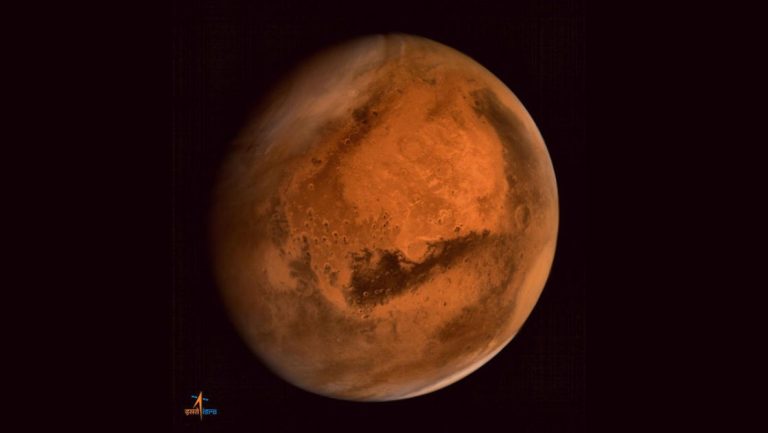
Few planets capture the human imagination quite like Mars. When it rises in the night sky, it shines with a distinct reddish glow that sets it apart from the surrounding stars. Ancient observers noticed this unusual color thousands of years ago. Many cultures associated the red hue with blood, fire, and battle. Over time the planet became closely connected with myths of warriors, gods, and powerful forces.
Mars has long stood as a symbol of action and intensity in both mythology and astrology. At the same time, it has become one of the most important worlds in modern astronomy. Scientists study Mars carefully because it offers clues about the past of our solar system and the possibility of life beyond Earth.
Today Mars continues to inspire scientists, storytellers, and sky watchers alike. Its surface shows the scars of ancient volcanoes, giant canyons, and evidence that water once flowed across its landscape. The planet’s myths and its science together form a fascinating story that stretches across centuries of human observation.
Mars in the Solar System
Mars is the fourth planet from the Sun. It orbits our star at an average distance of about 142 million miles. This places it just beyond Earth’s orbit and just inside the orbit of the asteroid belt.
A year on Mars lasts about 687 Earth days. That means the planet takes nearly two Earth years to complete one orbit around the Sun. Mars also rotates on its axis at a rate similar to Earth. One Martian day lasts about 24 hours and 37 minutes. Because of this similarity, scientists sometimes refer to a Martian day as a “sol.”
Mars is smaller than Earth but larger than Mercury. Its diameter measures about 4,212 miles, which is roughly half the diameter of Earth. Despite its smaller size, Mars has many surface features that are enormous compared to those on our planet.
The surface of Mars is covered with iron rich dust and rock. This iron reacts with oxygen in the thin atmosphere and creates rust. That rust gives the planet its reddish appearance, which is why Mars is often called the Red Planet.
Mars has two small moons named Phobos and Deimos. These moons were discovered in 1877 by the American astronomer Asaph Hall. Phobos is the larger of the two and orbits Mars very closely. Scientists believe both moons may be captured asteroid fragments or the remains of a larger object that broke apart long ago.
A Landscape of Giants
One of the most impressive features on Mars is Olympus Mons. This enormous volcano is the largest volcano known in the entire solar system. It rises about 13 miles above the surrounding plains and stretches more than 370 miles across.
Olympus Mons formed because Mars lacks the plate tectonics that constantly reshape Earth’s surface. Without moving plates to shift the volcano away from its magma source, lava continued to build the mountain higher and wider over millions of years.
Mars also contains a vast canyon system called Valles Marineris. This canyon stretches about 2,500 miles across the planet. In some places it reaches depths of more than four miles. By comparison, the Grand Canyon on Earth is only a small fraction of that size.
The surface of Mars includes ancient impact craters, volcanic plains, and dry river channels. Many of these channels appear to have formed when liquid water once flowed across the surface. Scientists believe Mars may have had a much warmer and wetter climate billions of years ago.
Evidence suggests that lakes and possibly shallow seas once existed on the planet. Today most of the water on Mars is frozen in the polar ice caps or trapped beneath the surface.
The Thin Atmosphere of Mars
Mars has a very thin atmosphere compared to Earth. The atmospheric pressure at the surface is less than one percent of the pressure we experience at sea level on Earth.
The Martian atmosphere is made mostly of carbon dioxide, with small amounts of nitrogen and argon. Because the atmosphere is so thin, it does not trap heat effectively. As a result, temperatures on Mars can vary widely.
During the daytime near the equator, temperatures can reach about 70 degrees Fahrenheit. At night they can drop to minus 100 degrees Fahrenheit or even colder.
Mars is also famous for its dust storms. Fine reddish dust covers much of the surface. Strong winds can lift this dust into the atmosphere and create enormous storms that sometimes cover the entire planet.
These global dust storms can last for weeks or even months. During these events sunlight becomes dim as the dusty atmosphere blocks much of the incoming light.
Polar Ice Caps and Frozen Water
Mars has polar ice caps at both its north and south poles. These caps are made of water ice mixed with frozen carbon dioxide, which is often called dry ice.
During the winter months carbon dioxide from the atmosphere freezes and forms a layer of frost on the surface of the polar regions. When spring arrives the carbon dioxide ice sublimates and returns to the atmosphere.
Scientists believe large amounts of water ice exist beneath the Martian surface as well. Radar measurements and spacecraft observations have revealed buried glaciers and ice deposits in several regions.
The presence of water ice is one reason Mars remains a focus for exploration. Water is a key ingredient for life as we know it. Studying Mars may help scientists understand whether simple life forms could once have existed there.
Exploring Mars with Spacecraft
Mars has been the target of many robotic missions from Earth. These missions include orbiters, landers, and rovers designed to study the planet in detail.
NASA’s Viking missions in the 1970s were the first spacecraft to land successfully on Mars. They returned the first images of the Martian surface and conducted experiments to search for signs of life.
In recent decades several robotic rovers have explored the planet. The rovers Spirit and Opportunity landed in 2004 and studied rocks and soil that showed evidence of past water activity.
The Curiosity rover landed in 2012 and continues to explore Gale Crater. It has discovered organic molecules and minerals that form in water. These discoveries suggest Mars once had conditions that may have supported microbial life.
More recently the Perseverance rover landed on Mars in 2021. Its mission includes searching for signs of ancient life and collecting rock samples that may one day be returned to Earth.
Each mission has added new pieces to the puzzle of Mars’s history. Scientists hope future missions may eventually bring humans to the Red Planet.
Mars in Ancient Sky Watching
Mars has been observed by humans for thousands of years. Its reddish color made it stand out among the stars and planets.
Ancient astronomers carefully recorded its movements across the sky. Mars sometimes appears to slow down and move backward against the background stars. This effect is known as retrograde motion.
Before the development of modern astronomy, retrograde motion puzzled many observers. The strange movement seemed mysterious and unpredictable.
Ancient Babylonian astronomers were among the first to document the motions of Mars in detail. Their records helped later civilizations understand planetary cycles.
In ancient Egypt Mars was associated with the god Horus. Egyptian astronomers referred to it as “Horus of the Horizon.” The planet’s appearance was seen as a powerful celestial sign.
Chinese astronomers also carefully observed Mars. In ancient Chinese records the planet was called the Fire Star because of its reddish color. The appearance of Mars was sometimes interpreted as an omen connected with political or military events.
Across many cultures the red planet became associated with conflict and power. This connection influenced the myths and names that developed over time.
The Roman God Mars
The planet Mars takes its modern name from the Roman god of war. In Roman mythology Mars represented strength, battle, and protection of the state.
Mars was one of the most important gods in Roman religion. He was believed to watch over soldiers and ensure victory in war. The Roman army often held ceremonies in his honor before major battles.
The red color of the planet likely contributed to its association with war. The hue reminded ancient observers of blood and fire. These connections reinforced the link between the planet and the war god.
In Greek mythology the equivalent god was Ares. However, the Romans viewed Mars in a more positive light than the Greeks viewed Ares. Mars was seen not only as a warrior but also as a guardian of agriculture and the Roman people.
The month of March was named after Mars. In ancient Rome March marked the beginning of the military campaigning season and the start of the traditional Roman year.
The mythological connection between the planet and the god of war has remained strong for centuries. Even today the name Mars evokes images of strength, conflict, and bold exploration.
Mars in Astrology
In astrology Mars represents energy, action, courage, and determination. Astrologers often describe Mars as the planet of drive and ambition.
Mars is associated with physical strength and competitive spirit. It is believed to influence how people assert themselves and pursue their goals.
The planet rules the zodiac sign Aries. Aries is often connected with leadership, initiative, and bold action. Mars also has a traditional association with Scorpio in classical astrology.
Astrologers believe the position of Mars in a birth chart can influence a person’s motivation and approach to challenges. It may also reflect how individuals express anger or passion.
When Mars appears to move backward across the sky during retrograde periods, astrologers sometimes interpret this as a time for reflection and reevaluation of personal goals.
While astrology focuses on symbolic meaning rather than scientific analysis, Mars continues to play a powerful role in astrological interpretation.
Observing Mars from Earth
Mars is one of the easiest planets to recognize in the night sky. Its reddish color makes it stand out clearly among the stars.
The brightness of Mars varies depending on its distance from Earth. When Mars and Earth align on the same side of the Sun, the planet appears brighter and larger. This event is called Mars in opposition.
Oppositions occur roughly every 26 months. During these times Mars can shine very brightly and remain visible throughout the night.
Through a small telescope Mars appears as a tiny reddish disk. Larger telescopes reveal dark surface markings and the bright white polar caps.
These surface features change slightly as the planet rotates. Observers can sometimes watch the polar caps shrink and grow with the Martian seasons.
Mars also travels along the same path in the sky followed by the Sun and Moon. This path is known as the ecliptic. As the planet moves along this path it passes through the constellations of the zodiac.
Because Mars moves more slowly than the inner planets, it can remain visible in the night sky for many months at a time.
Mars and the Dream of Exploration
Mars has long inspired dreams of exploration and discovery. Its similarities to Earth make it one of the most intriguing destinations in our solar system.
Scientists believe Mars once had rivers, lakes, and possibly oceans. Studying the planet helps researchers understand how climates evolve and how planetary environments change over time.
Many space agencies are planning future missions to explore Mars even more deeply. These missions may eventually include human explorers.
If humans do reach Mars, they will be continuing a long tradition of curiosity that began thousands of years ago when ancient observers first noticed a small red light moving among the stars.
Mars represents both the past and the future of planetary exploration.
A Planet of Myth and Science
Mars stands at the crossroads of mythology, astronomy, and human imagination. Its red glow inspired ancient myths about warriors and gods. Its surface reveals a complex history shaped by volcanoes, water, and time.
Today scientists study Mars with orbiters and robotic explorers. Each discovery brings new insight into how planets form and change.
For sky watchers, Mars remains one of the most recognizable planets in the heavens. Its reddish color and steady glow continue to draw the attention of observers around the world.
When you look up and see that small red point in the night sky, you are witnessing a planet that has inspired stories for thousands of years. Mars connects ancient myths with modern science and reminds us that the universe still holds many mysteries waiting to be explored.
Please be advised that, despite our best efforts, International Star Registry – Name a star provides astronomical content for entertainment purposes. We cannot guarantee the accuracy of all information given.