
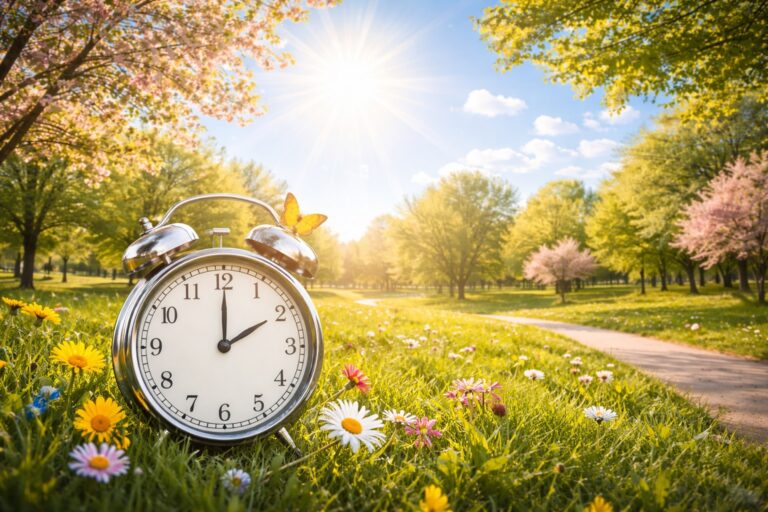
The Start of Daylight Saving Time in the United States
On Sunday, March 8, 2026, most Americans will wake up to a small but noticeable shift in time. At 2:00 a.m., clocks will move forward to 3:00 a.m., officially beginning Daylight Saving Time across much of the United States. While it may only be a one hour change on the clock, it often feels like a much bigger seasonal turning point. For many people, this is the moment when winter finally begins to loosen its grip and the promise of spring feels real.
Of course, not every part of the country participates. Hawaii and most of Arizona remain on standard time year round, and U.S. territories such as Puerto Rico and Guam also do not observe Daylight Saving Time. Still, for the majority of Americans, the second Sunday in March has become synonymous with the phrase “spring forward.” Some greet it with enthusiasm, while others brace themselves for a groggy Monday morning.
Despite the mixed reactions, the start of Daylight Saving Time carries a certain optimism. It means that sunsets will happen later in the evening. It means that after work or school, there will be daylight left to enjoy. It means that evening walks, backyard gatherings, and outdoor sports suddenly feel more inviting. Even though we technically lose an hour of sleep, we gain something that feels much more valuable during late winter: light.
A Look Back at the History of Daylight Saving Time
The idea of adjusting clocks to make better use of daylight is older than many people realize. Benjamin Franklin once joked about saving candles by getting people out of bed earlier, but his comments were meant to be humorous rather than practical policy. The serious development of Daylight Saving Time came much later, and it was driven largely by wartime needs.
The United States first adopted Daylight Saving Time in 1918 during World War I. The primary goal was to conserve fuel. Lawmakers believed that extending daylight into the evening would reduce the need for artificial lighting and therefore lower coal consumption. It was seen as a patriotic and practical move during a time of national strain.
However, once the war ended, the policy quickly became unpopular in many areas, particularly in rural communities. Farmers, who worked according to the Sun rather than the clock, found the shift disruptive. Markets and transportation schedules became complicated. As a result, the national mandate was repealed, and local governments were left to decide whether to observe it.
During World War II, Daylight Saving Time returned, this time known as “War Time.” Again, the motivation centered on energy conservation and coordination of industrial production. After the war, though, the country fell back into a patchwork of observance. Some states and cities followed Daylight Saving Time, while others did not. This created confusion for travelers, broadcasters, and businesses that operated across state lines.
In response to this chaos, Congress passed the Uniform Time Act in 1966. This law standardized the start and end dates for Daylight Saving Time nationwide, although it allowed states to opt out entirely. The act brought clarity and consistency, especially for transportation and commerce.
Over the years, lawmakers have adjusted the calendar slightly. The Energy Policy Act of 2005 extended Daylight Saving Time, moving the start date to the second Sunday in March and the end date to the first Sunday in November. Since 2007, Americans have followed this extended schedule, which includes the March 8 start date in 2026.
Why Do We Still Change the Clocks?
Originally, Daylight Saving Time was introduced to conserve energy, and that reasoning still appears in discussions today. The idea was simple: if people have more daylight in the evening, they will use less electricity for lighting. While modern energy use patterns are more complex, some studies suggest there are modest energy savings in certain regions.
However, energy conservation is no longer the only argument. Many supporters point to lifestyle benefits. Longer evenings encourage outdoor activity, which can improve physical and mental health. Families are more likely to take walks, visit parks, or play sports when there is daylight after dinner. Retail businesses often see increased foot traffic during brighter evenings, and restaurants with outdoor seating benefit from extended light.
There is also a public safety argument. Some research indicates that traffic accidents may decrease slightly when more people commute home in daylight. Visibility improves for drivers and pedestrians alike. While the evidence is not uniform across every region, it remains part of the conversation.
At the same time, critics raise valid concerns. The sudden loss of an hour of sleep can disrupt circadian rhythms, which are the natural cycles that regulate our sleep and wake patterns. Many people report feeling tired, irritable, or unfocused for several days after the shift. Studies have noted short term increases in heart attacks and workplace injuries in the days following the spring change. These health concerns have led some lawmakers to propose ending the biannual clock changes altogether.
Despite the debate, Daylight Saving Time remains in place for 2026. Discussions about making it permanent continue, but for now, Americans will once again move their clocks forward on March 8.
The Astronomical Reason the Days Are Getting Longer
It is important to remember that Daylight Saving Time does not actually create more daylight. It simply shifts our clocks to make better use of the light that is already increasing naturally. The real reason days are getting longer in March has everything to do with Earth’s tilt and orbit around the Sun.
Earth is tilted about 23.5 degrees on its axis. As it travels around the Sun over the course of a year, different parts of the planet receive varying amounts of sunlight. During winter in the Northern Hemisphere, Earth is tilted away from the Sun. This means the Sun appears lower in the sky, and daylight hours are shorter.
As we move toward spring, the Northern Hemisphere gradually tilts back toward the Sun. The Sun’s path climbs higher in the sky each day, and daylight stretches a little longer. By the time we approach the vernal equinox around March 20, day and night are nearly equal in length.
After the equinox, daylight continues to increase more rapidly. The Sun rises earlier and sets later. Temperatures begin to warm. Plants respond to the longer days by budding and blooming. Animals become more active. Human moods often lift as well, since exposure to natural light supports healthy sleep cycles and overall well being.
Daylight Saving Time aligns our clocks more closely with these longer evenings. Instead of having the Sun set at what feels like an early hour, we shift the clock so that sunset occurs later in the day. This gives us the impression of extended daylight during our waking hours, especially in the evening.
Reactions Across the Country
Every March, the reaction to Daylight Saving Time is predictable but divided. Some people dread the change and begin preparing days in advance. They adjust their bedtimes slowly and brace themselves for a difficult Monday morning. Others look forward to it with excitement, counting down the days until sunset moves past 7:00 p.m.
Morning people often find the transition easier. They are accustomed to rising early, and the darker morning sky may not disrupt their routine significantly. In fact, some early risers enjoy the quieter, darker mornings, which can feel peaceful and calm.
For those who struggle with early wake ups, the shift can feel abrupt. Losing an hour of sleep can magnify existing fatigue. Children may take a few days to adjust, and parents often notice changes in mood and bedtime resistance. Still, most households settle into the new schedule within a week.
What many people appreciate most is the change in the evening. After months of watching the Sun set before or shortly after dinner, it is refreshing to see daylight lingering. The extended light encourages people to stay outside longer. Neighbors chat on sidewalks. Joggers return to familiar routes. Youth sports practices move outdoors again.
The longer evenings also create a more leisurely atmosphere. There is less pressure to rush home before darkness falls. Dinner can stretch a little longer. Outdoor projects feel manageable. Even simple tasks, like walking the dog or checking the mail, feel different when done in daylight rather than under porch lights.
A Boost for Mood and Activity
There is a strong connection between light and mood. Exposure to natural light helps regulate melatonin production and supports healthy sleep patterns. While the initial time shift can temporarily disrupt sleep, the overall increase in evening light often improves people’s outlook as spring progresses.
Seasonal affective disorder, which affects some individuals during darker winter months, tends to ease as daylight increases. Even for those without clinical symptoms, brighter evenings can feel uplifting. The shift aligns daily life more closely with sunlight, which many people find energizing.
Outdoor recreation also benefits. Hiking trails, bike paths, and community parks see more visitors. Families are more likely to plan after dinner activities when it is still light outside. Organized sports leagues often begin their spring seasons shortly after the time change, taking advantage of the extended daylight.
For businesses, especially those tied to outdoor or leisure activities, the change can bring increased revenue. Garden centers, hardware stores, and restaurants with patios often notice a rise in customers once evenings brighten. The shift may be subtle, but it influences behavior in meaningful ways.
The Ongoing Debate
Despite its benefits, Daylight Saving Time remains controversial. Some experts argue that the twice yearly clock changes are unnecessary and disruptive. They point out that modern lighting and technology reduce the need for daylight based scheduling. Others counter that the lifestyle and economic benefits outweigh the temporary inconvenience.
There have been proposals to make Daylight Saving Time permanent, which would eliminate the fall transition back to standard time. Supporters believe this would provide consistent evening light year round. Opponents worry about darker winter mornings and potential safety concerns for children commuting to school.
As of March 8, 2026, no nationwide change has been enacted. Americans will continue the familiar routine of springing forward in March and falling back in November. The debate will likely continue, but for now, the rhythm remains the same.
Embracing March 8, 2026
When March 8 arrives, it will mark more than a simple clock adjustment. It will signal a seasonal shift that many people welcome with open arms. Even if the first morning feels a bit sleepy, the brighter evenings often make up for it quickly.
This time of year is especially rewarding for morning people. As spring progresses, sunrises will arrive earlier in real solar time, and early risers will witness the gradual return of dawn light. At the same time, everyone can enjoy the longer, more relaxed evenings that follow.
Daylight Saving Time may not actually create more sunlight, but it reshapes how we experience it. It invites us to step outside, linger a little longer, and notice the changing sky. It reminds us that winter is temporary and that brighter days are ahead.
On March 8, 2026, as clocks move forward and evening light stretches across neighborhoods, many Americans will feel that subtle but powerful shift. It is not just about time. It is about light, rhythm, and the gentle arrival of spring.
This information is provided by International Star Registry. We pioneered the concept of naming stars as a gift in 1979. Season after season, when you name a star it will shine forever. Many people ask us, can a person officially own a star by buying it?
No one can legally “own” stars or celestial bodies. We name stars in the sky. When you purchase is the symbolic naming of a star it’s a way to link someone’s name or memory with a specific star in the night sky. It’s similar to other symbolic gestures like dedicating a park bench or sponsoring a brick at a monument. The value is in the meaning and the record of your dedication. Your star name is recorded forever.
See what’s included in a star package
Please be advised that, despite our best efforts, International Star Registry – Name a star provides astronomical content for entertainment purposes. We cannot guarantee the accuracy of all information given.