
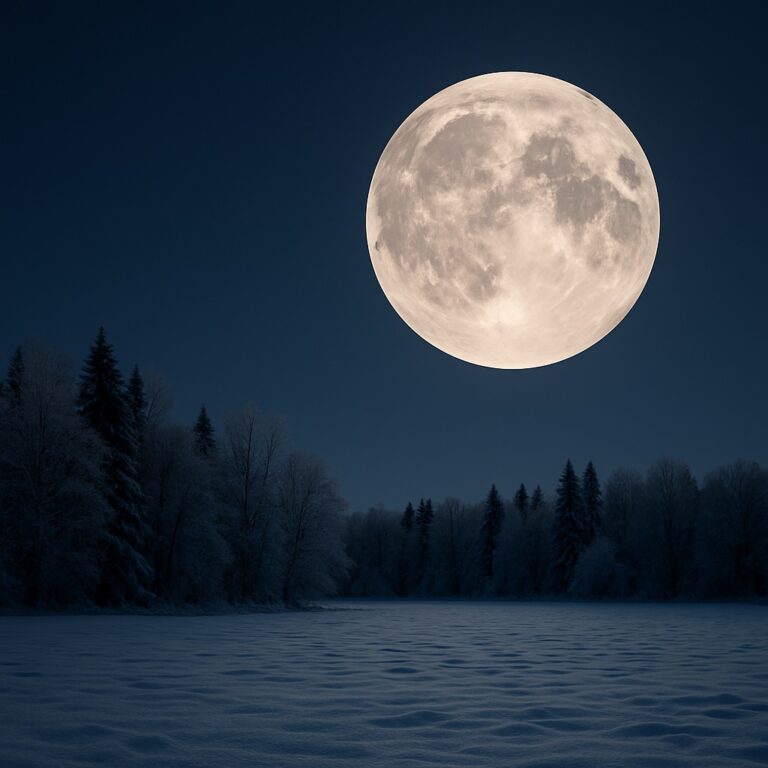
On January 3, 2026, the night sky will be graced by a powerful and mesmerizing celestial event: the Full Wolf Moon, which also happens to be a Supermoon. This is the first full moon of the new year and the first of three supermoons in 2026. It will reach full illumination at 10:04 UTC, with its radiant face fully reflecting the sun’s light as it shines on the opposite side of the Earth.
This Supermoon will appear larger and brighter than usual, making it an extraordinary event for stargazers, sky photographers, and astronomy lovers across the globe. It also holds a rich cultural and symbolic history, being known by early Native American tribes as the Wolf Moon, and also referred to as the Old Moon or the Moon After Yule.
Let’s dive deep into the magic, meaning, and sky-watching opportunities presented by this rare and majestic event.
🌕 What is a Supermoon?
A Supermoon occurs when a full moon coincides with the Moon’s perigee, the point in its orbit when it is closest to Earth. Because of this proximity, the Moon can appear up to 14% larger and 30% brighter than when it is at apogee (its farthest point from Earth).
The Supermoon on January 3, 2026, is the first of three supermoons in the year. It sets the tone for a spectacular year of lunar activity and offers a stunning astronomical show that you won’t want to miss.
🌌 The Full Wolf Moon: History and Symbolism
🐺 Why is it Called the Wolf Moon?
The Wolf Moon gets its name from Native American, Celtic, and Anglo-Saxon traditions. In the deep heart of winter, when snow blankets the ground and food becomes scarce, wolves would howl hungrily outside villages. These haunting howls echoed through the frozen forests and became associated with the January full moon.
Wolves were not only feared but also revered in many cultures. They symbolized loyalty, instinct, freedom, and the strength to survive in even the harshest conditions. The Wolf Moon was a reflection of the season’s wild and primal energy, marking a time for introspection, survival, and community bonding.
❄️ The Other Names of the January Full Moon
In addition to the Wolf Moon, this full moon is also known by other traditional names:
The Old Moon: Signifying the final days of the old year and the waning of winter’s grip.
Moon After Yule: In reference to its timing just after the Yule festival, a celebration of the winter solstice in many ancient European traditions.
Ice Moon: A name commonly used in Europe, symbolizing the coldest and darkest time of the year.
These names all evoke a sense of stillness, reflection, and the quiet beauty of winter.
🕙 Timing and Visibility: January 3, 2026 at 10:04 UTC
The Wolf Moon reaches its peak at 10:04 Coordinated Universal Time (UTC) on Saturday, January 3, 2026. While this is a morning time for many global regions, the full moon will still appear full and brilliant on the night of January 2 and into the early morning hours of January 3.
🌍 Best Viewing Locations
North America: Skywatchers across the U.S. and Canada can expect stunning moonrise views on January 2 and an especially brilliant moon hanging in the sky into the early hours of January 3.
Europe and Africa: The moon will be high and bright during the early hours before sunrise on January 3.
Asia and Oceania: Evening moonrise on January 3 will showcase the Supermoon in its full glory.
For optimal viewing of the moonrise, find a dark location, far from city lights, with a clear eastern horizon.
🌬️ January Skies and Seasonal Symbolism
❄️ Deep Winter in the Northern Hemisphere
By early January, winter has settled in across the Northern Hemisphere. The days are short, the nights are long, and the air is sharp and clear. The Full Wolf Moon shines against a backdrop of crisp winter constellations like Orion, Taurus, and Gemini.
🔭 Stargazing Tip
Bundle up, grab a pair of binoculars or a telescope, and head outdoors on the night of January 2 or early January 3 to witness the Wolf Moon rise. Look for its distinct golden hue as it appears on the horizon. It will appear magnified by the Earths atmosphere. This “Moon illusion” will make it look especially large and dramatic.
🌕 Supermoon Photography Tips
This Supermoon offers an ideal chance for lunar photography. Here are some tips:
Use a tripod for stability.
Include foreground elements like trees, mountains, or buildings to create scale.
Shoot at moonrise or moonset for the best atmospheric lighting and depth.
A telephoto lens (200mm or more) helps capture the lunar detail.
Experiment with both wide-angle and zoomed-in shots to capture the moon’s beauty and its relationship to the winter landscape.
🧘 Full Moon Energy: Reflection and Renewal
🌕 The Wolf Moon’s Spiritual Meaning
Full moons are often a time for completion, release, and reflection. The Wolf Moon brings with it themes of intuition, independence, and a call to reconnect with nature and self. This is the time to reflect on the past year while we prepare for the new year ahead. Many people feel a pull to retreat, reflect, and set new intentions for the year ahead.
It’s a perfect time to:
Write in a journal
Meditate under the moonlight
Light a candle and release old habits
Name a star as a meaningful gift in honor of new beginnings or loved ones
⭐ A Unique Way to Celebrate: Name a Star After Someone
What better way to mark the first full moon of the new year than to dedicate a star to someone you love?
At starregistry.com, you can name a real star in the sky after a friend, family member, or even a beloved pet. Each star is permenently recorded in the copyrighted catalog, making it a timeless and meaningful gift.
For the Wolf Moon Supermoon, it’s especially fitting:
Honor a lone wolf spirit or someone who inspires you to be courageous
Memorialize a loved one with a star that shines brightly on a cold winter’s night
Start the year with love and intention
🌟 Buy a star package for a magical way to celebrate this celestial event.
🐾 Family-Friendly Wolf Moon Activities
Looking for creative ways to enjoy the Full Wolf Moon with your family? Try these fun, cozy, and memorable activities:
1. Moonlit Nature Walk
Bundle up and take a walk under the moonlight. Bring flashlights, observe animal tracks in the snow, and listen for winter sounds. The moon will be bright enough to illuminate your path naturally.
2. Wolf Story Night
Read wolf-themed folktales or books like:
The Wolves in the Walls by Neil Gaiman
Julie of the Wolves by Jean Craighead George
Native American wolf legends
Make hot cocoa and read by the fireplace.
3. Howling Contest
Have a friendly howling contest! Kids will love mimicking wolves under the full moon. Record the sounds for fun.
4. Lunar Craft Time
Create paper moons, lunar calendars, or star-themed snow globes. Tie in the Wolf Moon theme with paw prints, forest silhouettes, and howling wolves.
5. Star Naming Ceremony
Make it extra special by naming a star together. Use the International Star Registry® to receive a certificate and star map to frame.
📖 Lunar Lore: Wolves and the Moon
The connection between wolves and the moon is deeply embedded in mythology and folklore:
In Roman mythology, the god Romulus was raised by a she-wolf.
Norse myths speak of the giant wolf Fenrir, destined to devour the sun and moon during Ragnarök.
Native American tribes believed wolves were spiritual guides and used the moon to mark time and seasons.
In popular culture, wolves howling at the moon are iconic, symbolizing mystery, wilderness, and transformation.
This full moon gives us a chance to honor these stories and connect with ancient traditions that celebrated the rhythm of nature.
🧙♀️ Moon Magic: January Rituals and Traditions
The Moon After Yule is a perfect time to create post-holiday intentions, especially after the busy, consumer-driven season.
🌑 Full Moon Ritual Ideas:
Burn away last year’s regrets by writing them on paper and placing them safely in a fireproof container or bonfire.
Create a “wolf totem” using natural objects or stones that symbolize strength and loyalty.
Brew a Wolf Moon tea with herbs like sage, lavender, or peppermint.
Charge your crystals or keepsakes in the moonlight.
🔭 Constellations to Watch During the Wolf Moon
January skies are rich with stars and constellations:
Orion the Hunter: Look for Orion’s Belt and Betelgeuse, a red supergiant star.
Taurus the Bull: Home to the Pleiades star cluster, visible as a glittering cluster near Orion.
Gemini the Twins: Features the bright stars Castor and Pollux.
Canis Major: Home to Sirius, the brightest star in the night sky.
These constellations provide a dazzling backdrop for the Wolf Moon’s brilliant glow.
🌠 Looking Ahead: More Supermoons in 2026
The January 3, 2026 Wolf Moon is just the beginning. Here are the other Supermoons to anticipate:
January 3, 2026 – Full Wolf Moon 🌕 (This post)
February 2, 2026 – Full Snow Moon 🌨️
March 4, 2026 – Full Worm Moon 🪱
Each one will bring its own magical energy, astronomical spectacle, and storytelling traditions.
📷 Share Your Moon Moments
Don’t forget to share your photos and moments under the Wolf Moon! Whether you’re watching it with loved ones, naming a star, or just standing in quiet awe, tag your images with:
#WolfMoon2026 #Supermoon #InternationalStarRegistry
We love to see your unique ways of honoring the skies above.
🌕 Final Thoughts: Embrace the Light of the Wolf Moon
The Full Wolf Moon Supermoon on January 3, 2026 invites us to:
Reflect on the year behind us
Set powerful intentions for the new year ahead
Marvel at the natural beauty and precision of the cosmos
Reconnect with ancient wisdom and the wild call of winter
Whether you celebrate with a moonlit walk, a cozy night by the fire, or by dedicating a star through the International Star Registry®, let this moon remind you: even in the darkest season, the light still finds us.
Please be advised that, despite our best efforts, International Star Registry – Name a star provides astronomical content for entertainment purposes. We cannot guarantee the accuracy of all information given.