
Astronomy, History, and a Winter Sky Viewing Guide for the 2026 Snow Moon
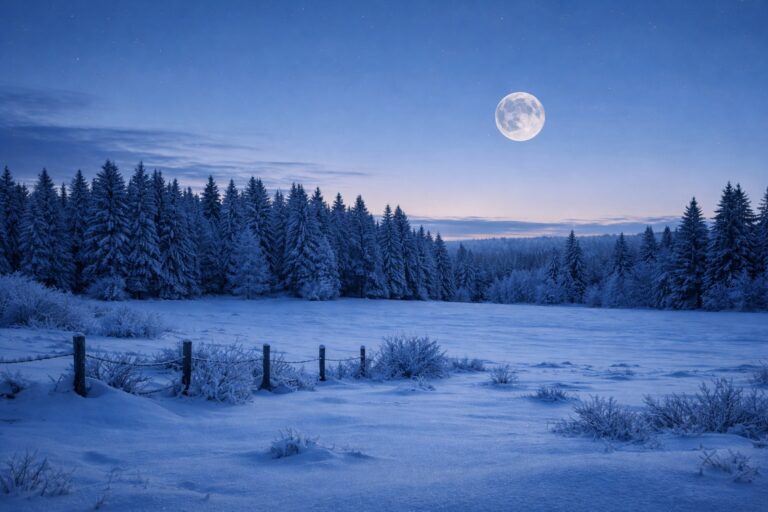
On February 1, 2026, the Moon reaches its full phase at 3:11 ET, shining brightly as the Snow Moon, the second full moon of both the year and the winter season in the Northern Hemisphere. At this moment, the Moon will be positioned on the opposite side of Earth from the Sun, with its near side fully illuminated. Rising around sunset and setting near sunrise, the Snow Moon will dominate the long winter night, reflecting not only sunlight but centuries of human observation, seasonal survival, and sky lore.
February’s full moon has long been associated with cold, snow, and scarcity. Early Native American tribes named it the “Snow Moon” because this period typically brought the heaviest snowfall of the year, making travel and hunting difficult. Some tribes also called it the “Hunger Moon”, acknowledging the hardship of late winter when food stores dwindled and game was hard to find. Beyond its cultural resonance, the Snow Moon also arrives during one of the most visually rich times of year for stargazers in North America, when crisp air and long nights reveal brilliant constellations and deep-sky treasures.
In modern times, this is a time to stay cozy with your loved ones, or bundle up and experience the glittering sight of the beautiful winter moon on crystaline snow.
Let’s take a look at the February 1, 2026 Snow Moon from multiple perspectives: its astronomical mechanics, its place in seasonal cycles, its historical and cultural names, and what skywatchers across North America can expect to see during this winter full moon.
Understanding the Snow Moon of 2026
The term “Snow Moon” is a traditional name rooted in seasonal experience. February in the Northern Hemisphere is often the coldest and snowiest month of the year, particularly across large portions of North America. The full moon that occurs during this time naturally became linked with snow, ice, and winter hardship.
The February 1, 2026 Snow Moon is also notable because it is the second full moon of the winter season. Astronomically, winter in the Northern Hemisphere begins with the December solstice and ends with the March equinox. Within that interval, two or three full moons typically occur. In the winter of 2025–2026, January and February each host a full moon, making the February Snow Moon the second full moon of the season before spring approaches.
The Astronomical Mechanics of a Full Moon
Sun–Earth–Moon Alignment
A full moon occurs when the Moon is positioned nearly opposite the Sun in the sky, with Earth between the two. At this time, the Moon’s entire near side is illuminated by sunlight, producing the bright, round disk we recognize as a full moon. This configuration is known as “opposition”.
For the Snow Moon of February 1, 2026, this opposition happens precisely at 20:11 UTC. While the Moon appears full for several nights around this moment, this timestamp marks the exact instant when the Sun, Earth, and Moon align most closely in a straight line.
Why Full Moons Look So Bright
The Moon does not emit its own light; it reflects sunlight. During a full moon, sunlight strikes the lunar surface directly and reflects back toward Earth. Additionally, a phenomenon called the opposition effect slightly increases brightness. Shadows cast by lunar surface features become less visible when the Sun is directly behind Earth, making the Moon appear especially luminous.
Winter full moons often seem brighter still, not because the Moon itself changes, but because cold, dry air tends to be clearer and steadier than humid summer air. Snow-covered landscapes also reflect moonlight, amplifying nighttime brightness.
Distance and Orbit Considerations
The Moon’s orbit around Earth is elliptical, meaning its distance varies throughout the month. The February 1, 2026 Snow Moon does not coincide with an extreme point such as perigee (closest approach) or apogee (farthest distance). As a result, it is neither classified as a “supermoon” nor a “micromoon,” but rather a typical full moon in terms of apparent size.
Winter Context: Why February Full Moons Matter
February occupies a unique place in the seasonal calendar. In much of North America, it represents the depth of winter, when nights are still long and cold even though daylight is slowly increasing after the December solstice. Historically, this was a time of endurance.
Before modern infrastructure, heavy snow could isolate communities, limit travel, and reduce access to food. The Snow Moon’s bright presence in the night sky served both practical and symbolic roles—providing light during long nights and marking time within the lunar calendar.
The fact that the Snow Moon often rises over frozen landscapes adds to its dramatic appearance. Moonlight reflecting off snow can illuminate entire fields and forests, creating scenes of striking beauty and quiet intensity.
In modern culture, the month of February is also associated with Valentine’s Day, bringing a special air of romance to this month’s full moon.
Cultural and Historical Names of the Snow Moon
Native American Traditions
Many of the traditional full moon names used today originated with Indigenous peoples of North America, though names varied widely between tribes and regions. The term “Snow Moon” was common among tribes in the northeastern United States, where February snowfall was typically heaviest.
The name “Hunger Moon” reflects a more sobering reality. Late winter was often a time of food scarcity, as stored supplies ran low and hunting conditions were harsh. Deep snow made it difficult to track animals, and rivers and lakes were often frozen.
Other traditional names recorded across different cultures include:
Storm Moon, emphasizing winter weather
Bone Moon, suggesting scarcity of food
Ice Moon, reflecting frozen conditions
These names were not merely poetic; they were practical markers of seasonal challenges and survival strategies.
European and Global Perspectives
In Europe, February’s full moon was sometimes associated with purification rituals or preparations for spring planting. Across the world, lunar calendars helped agricultural societies track time, plan ceremonies, and anticipate seasonal changes. While the specific name “Snow Moon” is primarily North American, the association between February’s full moon and winter hardship is nearly universal in northern latitudes.
Observational Highlights of the February 2026 Snow Moon
Brightness and Color in Winter Skies
Under clear winter conditions, the Snow Moon can appear dazzlingly white or slightly bluish. When low on the horizon, however, atmospheric scattering can tint the Moon yellow, orange, or even pale red. Cold air often produces sharper views with less atmospheric distortion than summer skies.
Occasionally, ice crystals in the atmosphere can create lunar halos, circular rings of light surrounding the Moon. These halos are caused by moonlight refracting through hexagonal ice crystals in high clouds and are more common during winter months.
Constellations Visible During the Snow Moon
February evenings feature some of the most famous and easily recognizable constellations in the night sky. Although the brightness of the full moon can wash out faint stars, the brightest winter constellations remain visible.
Orion and Its Neighbors
Orion the Hunter dominates the southern sky during February evenings. Even under full moonlight, Orion’s bright stars, known as Betelgeuse, Rigel, Bellatrix, and Saiph, stand out clearly. Orion’s Belt serves as a guidepost to other constellations.
To the east of Orion lies Gemini, marked by the bright twin stars Castor and Pollux. To the west is Taurus, home to the bright orange star Aldebaran and the nearby Pleiades star cluster, which may still be visible despite moonlight.
Canis Major and the Brightest Star
Below Orion shines Canis Major, containing Sirius, the brightest star in the night sky. Sirius is unmistakable and easily visible even in light-polluted areas and during a full moon.
Auriga and Winter’s Northern Stars
Overhead or slightly to the north, observers may spot Auriga, identified by the bright star Capella. Auriga is well placed during February evenings and remains visible through much of the night.
Circumpolar Constellations
From mid-northern latitudes, circumpolar constellations such as Ursa Major and Cassiopeia never set. During February, these constellations are well positioned for observation throughout the night, regardless of moon phase.
Planets Around the Time of the Snow Moon
Planet visibility varies from year to year, but during early 2026, several planets may be visible at different times of night depending on their positions relative to the Sun.
Bright planets such as Jupiter or Venus, if visible during this period, will easily outshine most stars and remain visible even under full moonlight. Planets do not twinkle like stars, which helps distinguish them from stellar points of light.
Deep-Sky Objects and Full Moon Limitations
A full moon significantly brightens the sky, making faint galaxies and nebulae difficult to observe. However, some deep-sky objects remain visible:
The Orion Nebula can still be glimpsed with binoculars or a telescope.
The Pleiades and Hyades star clusters remain attractive naked-eye targets.
Bright open clusters such as the Beehive Cluster in Cancer may be visible later in the night when the Moon is lower.
Observers interested in deep-sky viewing often plan sessions for nights before or after the full moon, when moonlight interference is reduced.
The Snow Moon as the Second Full Moon of Winter
Winter full moons carry special significance because of their timing and visual impact. With snow on the ground and leaves off the trees, moonlight travels unimpeded, illuminating landscapes in a way that is rarely possible in other seasons.
The February 1, 2026 Snow Moon concludes the sequence of winter full moons, serving as a celestial marker that spring is approaching, even if winter conditions persist.
Viewing the Snow Moon from North America
Moonrise and Moonset Behavior
Around the time of a full moon, the Moon rises near sunset and sets near sunrise. This means the Snow Moon will be visible for most of the night across North America, weather permitting.
Regional Viewing Considerations
Eastern North America: The Moon will rise earlier in the evening relative to local time and reach high altitude overnight.
Central Regions: Observers will experience similar all-night visibility with the Moon reaching its highest point around midnight.
Western North America: Moonrise will occur later by the clock, but the Moon will still dominate the night sky.
Light Pollution and Winter Observing
While urban light pollution reduces the visibility of faint stars, the Moon itself is largely unaffected. Winter skies often provide steadier viewing conditions, and cold air can enhance contrast.
Precise Timing of the Full Moon Phase
The exact moment of full moon occurs at 20:11 UTC on February 1, 2026. Converted to North American time zones, this corresponds approximately to:
Eastern Time: 3:11 p.m.
Central Time: 2:11 p.m.
Mountain Time: 1:11 p.m.
Pacific Time: 12:11 p.m.
Although the precise phase occurs during daytime for much of North America, the Moon will appear full on the surrounding nights.
Weather, Snow, and Atmospheric Effects
February weather often enhances the Snow Moon’s visual impact. Snow-covered ground reflects moonlight efficiently, creating brighter nights. Ice crystals can produce halos or light pillars, adding to the spectacle.
Lunar Science Highlights
During a full moon, surface details such as “lunar maria”, which are the dark basaltic plains formed by ancient volcanic eruptions, are especially prominent. Features like Mare Imbrium, Mare Serenitatis, and Mare Tranquillitatis are easily visible to many people with the naked eye.
While shadows are minimal during a full moon, making crater relief less pronounced, the overall face of the Moon is clearly displayed.
Human Traditions and the February Moon
Throughout history, February’s full moon has been a time of endurance and anticipation. It marked a point when winter was not yet over, but its end could be imagined. Lunar calendars helped communities track time, plan future activities, and maintain cultural continuity during harsh seasons.
This is also a time for staying home, keeping warm, and enjoying the comfort of family and loved ones.
The Snow Moon’s Sparkling Presence
The February 1, 2026 Snow Moon stands as both an astronomical event and a seasonal symbol. Rising over glittering frozen landscapes, illuminating winter skies, and connecting modern observers with centuries of tradition, it offers a moment of reflection during the coldest part of the year.
Whether viewed from a city street or a snow-covered field, the Snow Moon reminds us of Earth’s place in a rhythmic celestial system—one that continues to mark time, seasons, and human experience with unwavering precision.
Please be advised that, despite our best efforts, International Star Registry – Name a star provides astronomical content for entertainment purposes. We cannot guarantee the accuracy of all information given.